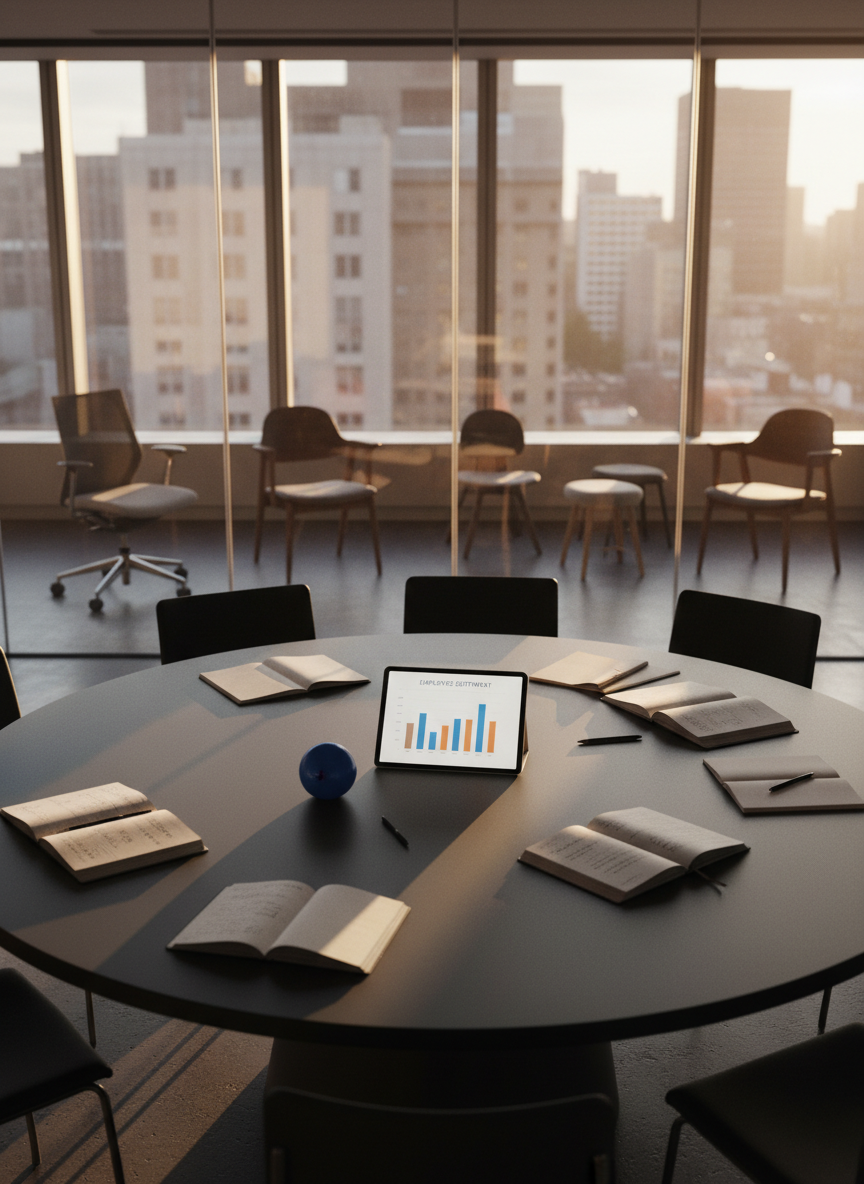
A circular meeting table stands alone in a glass-walled conference room, its dark matte surface scattered with open notebooks, a digital tablet displaying an anonymized bar graph of employee sentiment, and a single stress ball slightly indented, as if just released. Beyond the glass, a diverse mix of empty chairs in different styles hints at varied roles and backgrounds. Late afternoon light filters through city-facing windows, creating a dynamic contrast of bright highlights and soft shadows. Photographic realism, shot from a slightly elevated angle with rule-of-thirds composition, conveys a mood of constructive disruption and empowerment, as though a frank discussion about toxic culture and change has just paused and could resume at any moment.

Our Mission

Exposing toxic norms and organizing for workplaces built on dignity, transparency, and collective power.

About

Why Josie Junction Impact Exists

Josie Junction Impact was born from lived experience in toxic offices, created to name what others silence, connect workers across industries, and demand accountability while championing humane, equitable workplaces where every voice matters and no one is disposable.
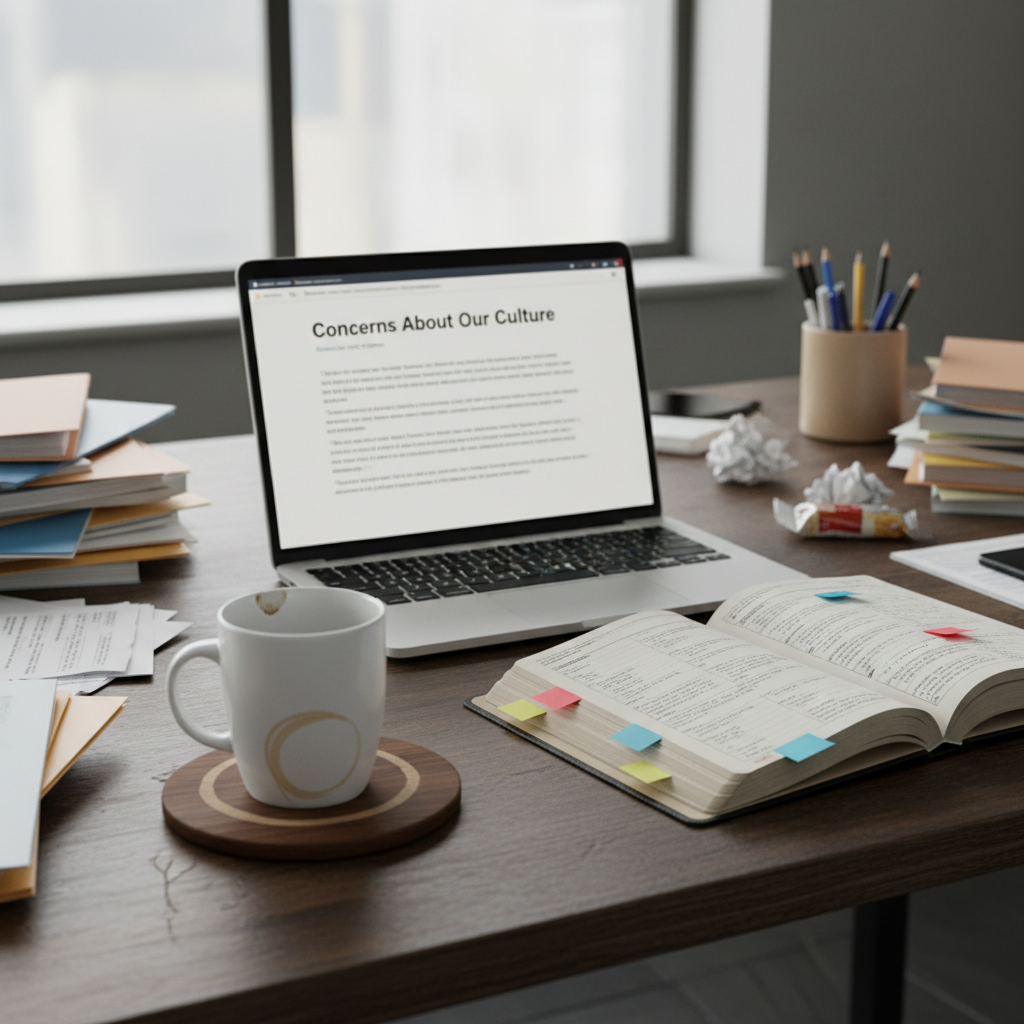
A close-up, photographic realism shot of a cluttered manager’s desk in a corporate office, captured from an eye-level perspective. A sleek laptop screen shows a half-written, unsent email titled “Concerns About Our Culture,” the text blurred for privacy. Beside it, a dog-eared employee handbook lies open, with several pages marked by color-coded tabs. A ceramic mug with a small chip at the rim rests on a coaster ringed with faint coffee stains. Soft overcast light from a nearby window casts subtle shadows and emphasizes the paper textures and desk grain. The atmosphere feels tense but hopeful, as if a turning point is approaching, highlighting the courage it takes to challenge harmful workplace norms without depicting any human figures.

About Josie

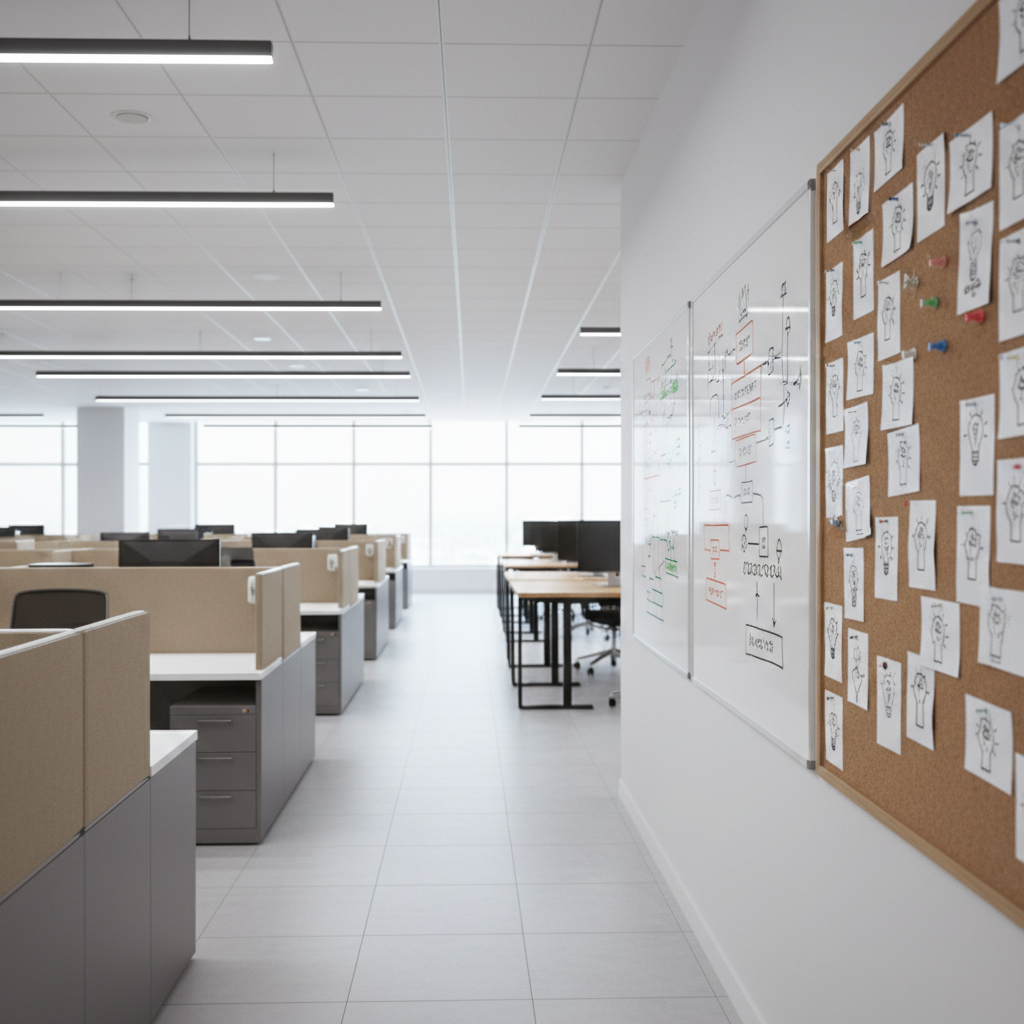
An expansive office corridor shot in photographic realism, captured from a low, slightly forward-moving perspective to create a sense of momentum. On one side, a row of typical corporate cubicles fades into soft blur; on the other, a more open, collaborative zone features standing desks, whiteboards covered in abstract diagrams, and a large bulletin board filled with anonymous suggestion cards and printed icons of raised fists and lightbulbs instead of text. Overhead LED lighting mixes with cool daylight seeping from distant windows, creating a clear, honest atmosphere. The composition uses leading lines to pull the viewer toward the brighter, open area, symbolizing a shift from restrictive, harmful culture to transparent, empowering workplaces, all conveyed without showing any people.

Aarav Sharma

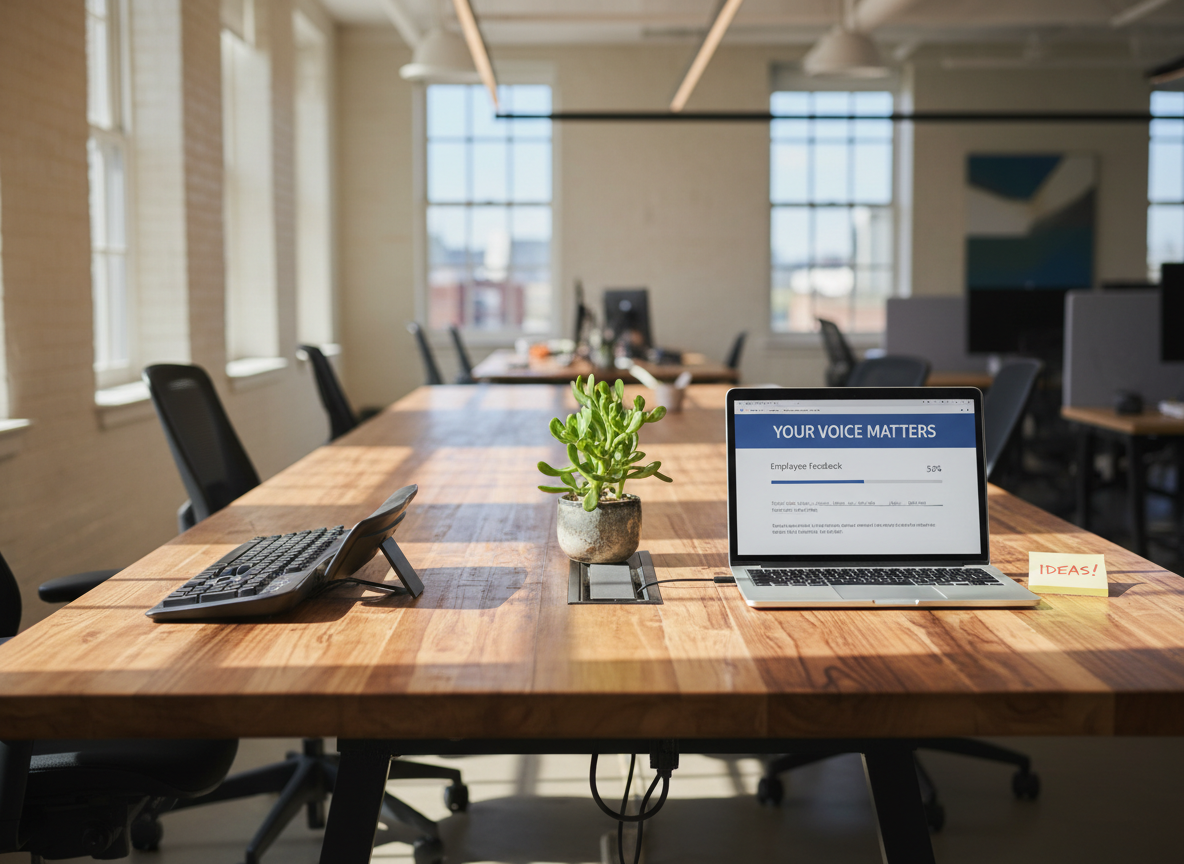
A long, shared office table made of warm, slightly worn wood stretches through the center of a modern, open-plan workplace. Several distinct workstations are visible: an ergonomic keyboard mid-typed, a laptop screen paused on an employee feedback survey, a bright sticky note with a drawn lightning bolt, and a small potted plant with vibrant green leaves. Natural daylight pours in from tall windows, creating soft, realistic shadows along the tabletop and across muted, textured walls. Photographic realism at eye level, with a shallow depth of field keeping the table in sharp focus while the rest of the office blurs into an inviting yet serious backdrop, suggesting a bold, authentic conversation about workplace culture without showing any people.

Mateo García

A circular meeting table stands alone in a glass-walled conference room, its dark matte surface scattered with open notebooks, a digital tablet displaying an anonymized bar graph of employee sentiment, and a single stress ball slightly indented, as if just released. Beyond the glass, a diverse mix of empty chairs in different styles hints at varied roles and backgrounds. Late afternoon light filters through city-facing windows, creating a dynamic contrast of bright highlights and soft shadows. Photographic realism, shot from a slightly elevated angle with rule-of-thirds composition, conveys a mood of constructive disruption and empowerment, as though a frank discussion about toxic culture and change has just paused and could resume at any moment.

Zuri Ndlovu

A close-up, photographic realism shot of a cluttered manager’s desk in a corporate office, captured from an eye-level perspective. A sleek laptop screen shows a half-written, unsent email titled “Concerns About Our Culture,” the text blurred for privacy. Beside it, a dog-eared employee handbook lies open, with several pages marked by color-coded tabs. A ceramic mug with a small chip at the rim rests on a coaster ringed with faint coffee stains. Soft overcast light from a nearby window casts subtle shadows and emphasizes the paper textures and desk grain. The atmosphere feels tense but hopeful, as if a turning point is approaching, highlighting the courage it takes to challenge harmful workplace norms without depicting any human figures.

Leila Haddad

An expansive office corridor shot in photographic realism, captured from a low, slightly forward-moving perspective to create a sense of momentum. On one side, a row of typical corporate cubicles fades into soft blur; on the other, a more open, collaborative zone features standing desks, whiteboards covered in abstract diagrams, and a large bulletin board filled with anonymous suggestion cards and printed icons of raised fists and lightbulbs instead of text. Overhead LED lighting mixes with cool daylight seeping from distant windows, creating a clear, honest atmosphere. The composition uses leading lines to pull the viewer toward the brighter, open area, symbolizing a shift from restrictive, harmful culture to transparent, empowering workplaces, all conveyed without showing any people.

“This blog helped me name the abuse I was living through and finally demand better.”

— Aya Nakamura